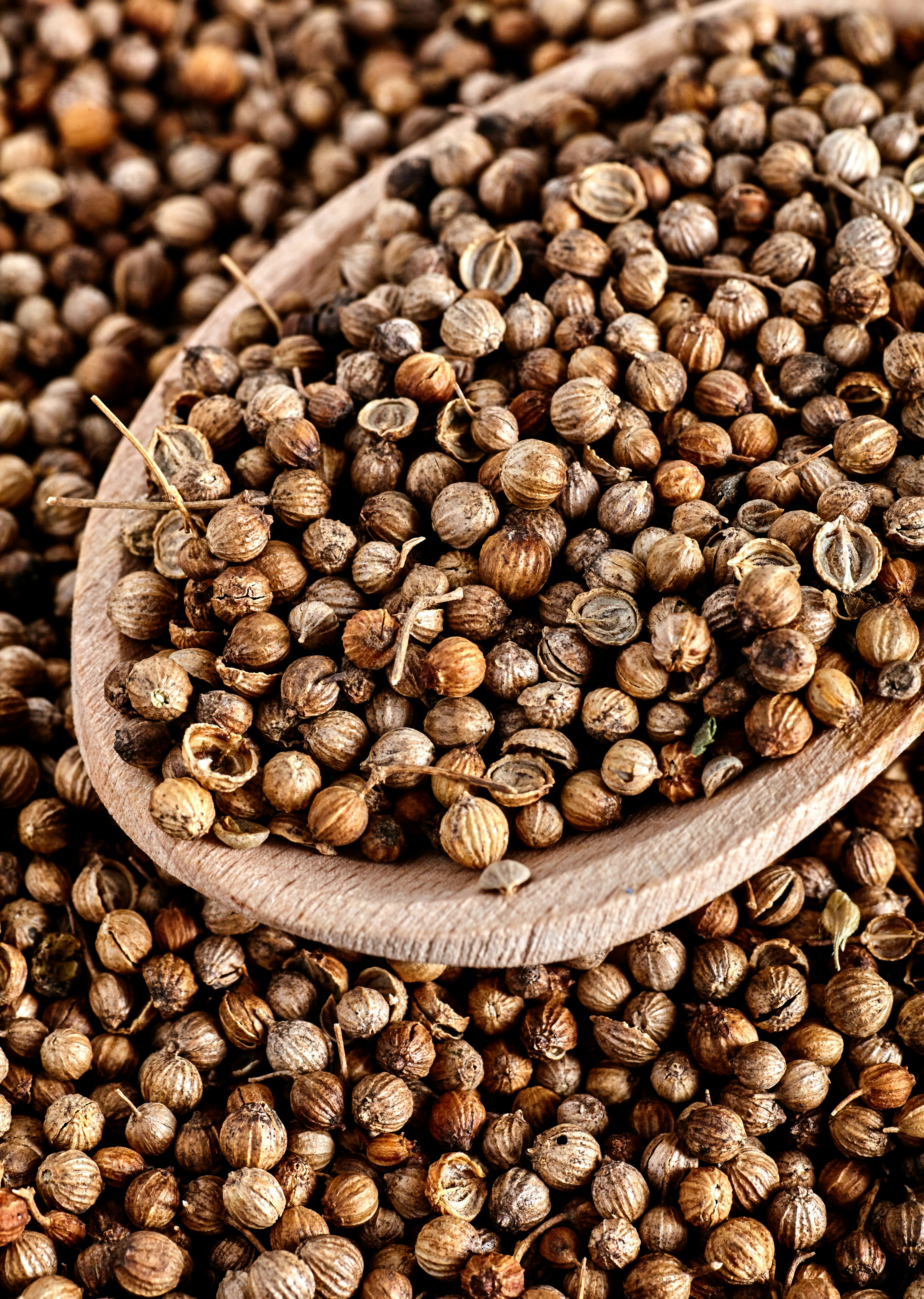
Coriander (Coriandrum sativum)
Field Note #011

Coriander

Coriandrum sativum
Terpene Alcohols Esters Citrus-Floral Gin Botanical
Linalool makes up 60-80% of coriander seed essential oil. That's the same compound that defines lavender and elderflower, but in coriander it's framed by geranyl acetate and gamma-terpinene, which shift the perception from floral to citrus-spice. Context changes everything.
Extract Sensory Notes In the Glass Compound Map Connections Takeaway

Extract

Coriander seeds should be lightly cracked, not ground, before maceration. Grinding exposes too much surface area and over-extracts the fatty acids that turn rancid quickly. Cracked seeds in 80-100 proof spirit for 48 hours pull the terpene alcohols and esters cleanly.

There's a significant difference between Indian and Moroccan coriander at the compound level. Indian varieties tend to be higher in linalool (more floral). Moroccan varieties lean toward more geranyl acetate and geraniol (more citrusy). For bitters, Moroccan coriander provides better citrus lift.

Vacuum distillation at 36C captures linalool and geranyl acetate beautifully. The resulting hydrosol is a versatile citrus-floral modifier that integrates more cleanly than a tincture in delicate preparations.

Sensory Notes

Coriander seed is the quiet workhorse of gin and bitters formulation. It provides citrus character without citrus peel's bitterness, and floral character without the fragility of actual flowers.

Aroma

Warm, citrusy, faintly floral. The linalool provides a lavender-like base, but the geranyl acetate pushes the overall impression toward lemon-orange. Faint peppery note from gamma-terpinene.

Taste

Mildly sweet with a gentle, warm spice quality. No significant bitterness. The citrus note reads as zesty rather than sour. Subtle nuttiness in over-extracted preparations.

Mouthfeel

Light, slightly warming. No coating, no astringency. Coriander is an aromatic ingredient that works through the nose. Almost no tactile presence on the palate.

Finish

Medium, clean, with the citrus note persisting slightly longer than the floral. The linalool fades evenly, leaving a pleasant warmth.

In the Glass

Coriander is the unsung hero of gin for good reason. It provides the citrus-spice bridge that connects juniper's terpenes to the rest of the botanical bill. In bitters, it plays the same bridging role.

Gin & Tonic

Gin & Tonic

Coriander-forward bitters in a G&T amplify the gin's existing coriander notes, creating a feedback loop that reads as 'more gin' without adding more alcohol.

Corpse Reviver #2

Corpse Reviver #2

Coriander's linalool bridges the Lillet's wine notes and the gin's botanicals. A dash of coriander bitters ties the entire drink into a cohesive aromatic profile.

Compound Map

Coriander's essential oil is dominated by linalool but derives its distinctive character from the supporting cast of esters and terpenes.

Monoterpene Alcohol

Linalool

60-80% of essential oil. Floral, sweet, slightly woody. The dominant compound, but perceived as citrusy in coriander due to the ester context.

Ester

Geranyl Acetate

Citrusy, rose-like ester. 1-5% but disproportionately impactful. Shifts the linalool perception from lavender-floral toward lemon-citrus.

Monoterpene Alcohol

Geraniol

Rose-scented terpene alcohol. Reinforces the floral-citrus bridge. More prominent in Moroccan varieties.

Monoterpene

gamma-Terpinene

Slightly peppery, herbaceous monoterpene. Provides the warm, spicy undertone that distinguishes coriander from pure floral aromatics.

Monoterpene

alpha-Pinene

Pine-like terpene at 4-10%. Connects coriander's profile to juniper, which is why they pair so naturally in gin.

Aldehyde

Decanal

Waxy, orange-peel aldehyde at trace levels. Adds a subtle citrus-rind quality that reinforces the overall citrus impression.

Connections

Coriander's linalool content makes it a natural bridge to any botanical in the floral-citrus spectrum.

Takeaway

Citrus without the citrus.

Coriander seed gives you citrus character that's shelf-stable, consistent batch to batch, and free of the oxidation issues that plague citrus peel tinctures. Geranyl acetate and linalool create a citrus impression that's more durable than actual lemon oil. In bitters formulation, coriander is how you add brightness without fragility. It's the compound shortcut to citrus that doesn't expire in three weeks.

← Previous Note
Cardamom