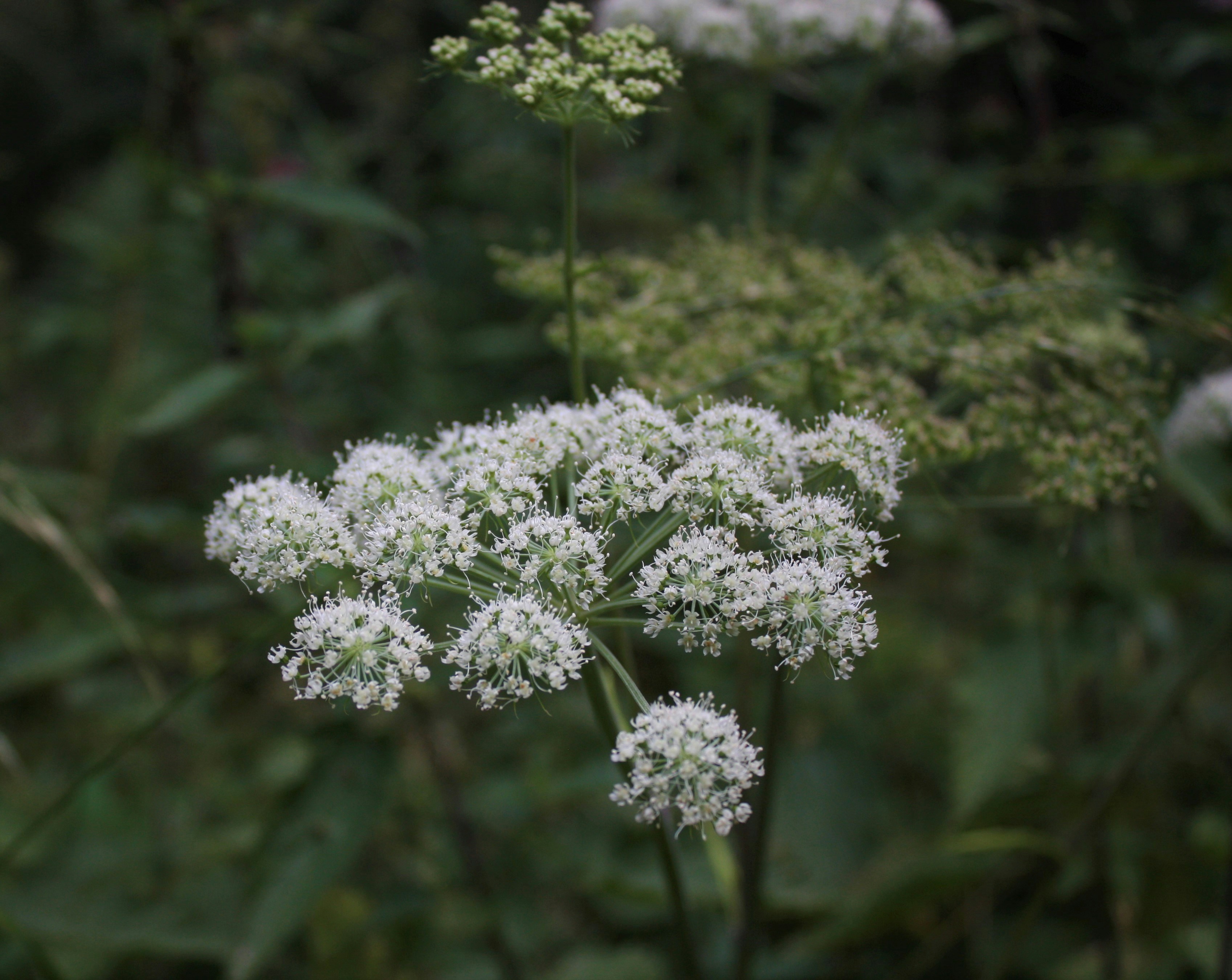
Angelica root extracts best in 50-60% ethanol. The phthalides and coumarins pull steadily over 48-72 hours of cold maceration. The root should be dried and coarsely broken, not powdered; fine particles cloud the extract and pull excessive starch.
The volatile oil is complex: alpha-pinene, beta-phellandrene, limonene, and the signature phthalide ligustilide. These give angelica its warm, peppery, slightly musky aroma. The phthalides are the structural molecules that make angelica essential in formulation; they act as bridges between otherwise incompatible flavor compounds.
Furanocoumarins (bergapten, imperatorin) are present and photosensitizing. This matters for topical applications but is not a concern in standard tincture dosing for beverages. The coumarins contribute a subtle sweetness and hay-like warmth that rounds out the overall profile.
Angelica Root presents a distinctive sensory profile that reflects its unique compound composition.
Warm, earthy, musky with peppery top notes. A subtle sweetness underneath, like dried hay and honey. The scent is grounding and persistent.
Mildly bitter with a warm, peppery quality. Not sharp. The bitterness is more textural than intense; it adds structure without demanding attention. Faint sweetness from coumarins.
Medium body. Slightly warming. The phthalides create a rounding, bridging sensation that smooths transitions between other flavors. This is its primary functional role in formulation.
Medium to long. The earthy, musky quality lingers. A gentle warmth persists. The bridging effect becomes most apparent on the finish, where angelica ties departing flavors together.
Angelica Root finds its role in formulation through its primary compound contributions and how they interact with other ingredients.
Angelica root is second only to juniper in gin's botanical bill. It doesn't add a distinctive flavor; it makes juniper, coriander, and citrus peel behave as a unified whole rather than separate ingredients.
In complex multi-botanical liqueurs, angelica root acts as the mortar between the bricks. Without it, 130 ingredients would read as noise. With it, they cohere.
The signature structural compound. A lactone that acts as a flavor bridge, smoothing transitions between disparate aromatic compounds. The reason angelica 'connects' other ingredients.
Prenylated coumarin contributing subtle sweetness and warmth. Part of the hay-like, honeyed base note that makes angelica feel rounded rather than sharp.
Photosensitizing furanocoumarin. Present in root and seed. Not a primary flavor driver but contributes to the overall coumarin warmth. Relevant for safety documentation.
Sharp, resinous pine note. Part of the volatile top note that gives angelica its initial peppery, fresh aroma before the deeper musky notes emerge.
Peppery, slightly minty monoterpene. Major component of the essential oil. Contributes the warm, spicy character that distinguishes angelica from more floral botanicals.
Citrus brightness in the top note. Present at lower concentrations than in citrus peel but enough to add lift to the otherwise earthy, grounding profile.
Gentian provides the bitter backbone; angelica provides the structural bridge. In combination, gentian's sharp secoiridoid bite is smoothed and extended by angelica's phthalides. This is a foundational pairing in amaro production.
Wormwood's intense sesquiterpene lactone bitterness benefits from angelica's rounding effect. The combination appears in vermouth, Chartreuse, and most serious European bitter liqueurs.
Coriander's linalool-driven citrus character and angelica's earthy phthalides create the classic gin botanical axis. They define the mid-palate bridge between juniper's top notes and orris root's base.
Angelica root will never be the headline ingredient in a formula. That's exactly what makes it indispensable. Ligustilide and the phthalide family act as molecular bridges, connecting sharp top notes to heavy bases and making complex botanical blends read as coherent wholes. Without angelica, gin is just flavored vodka. Without it, Chartreuse is just noise. The best formulas are built on ingredients you can't individually identify but would immediately miss.