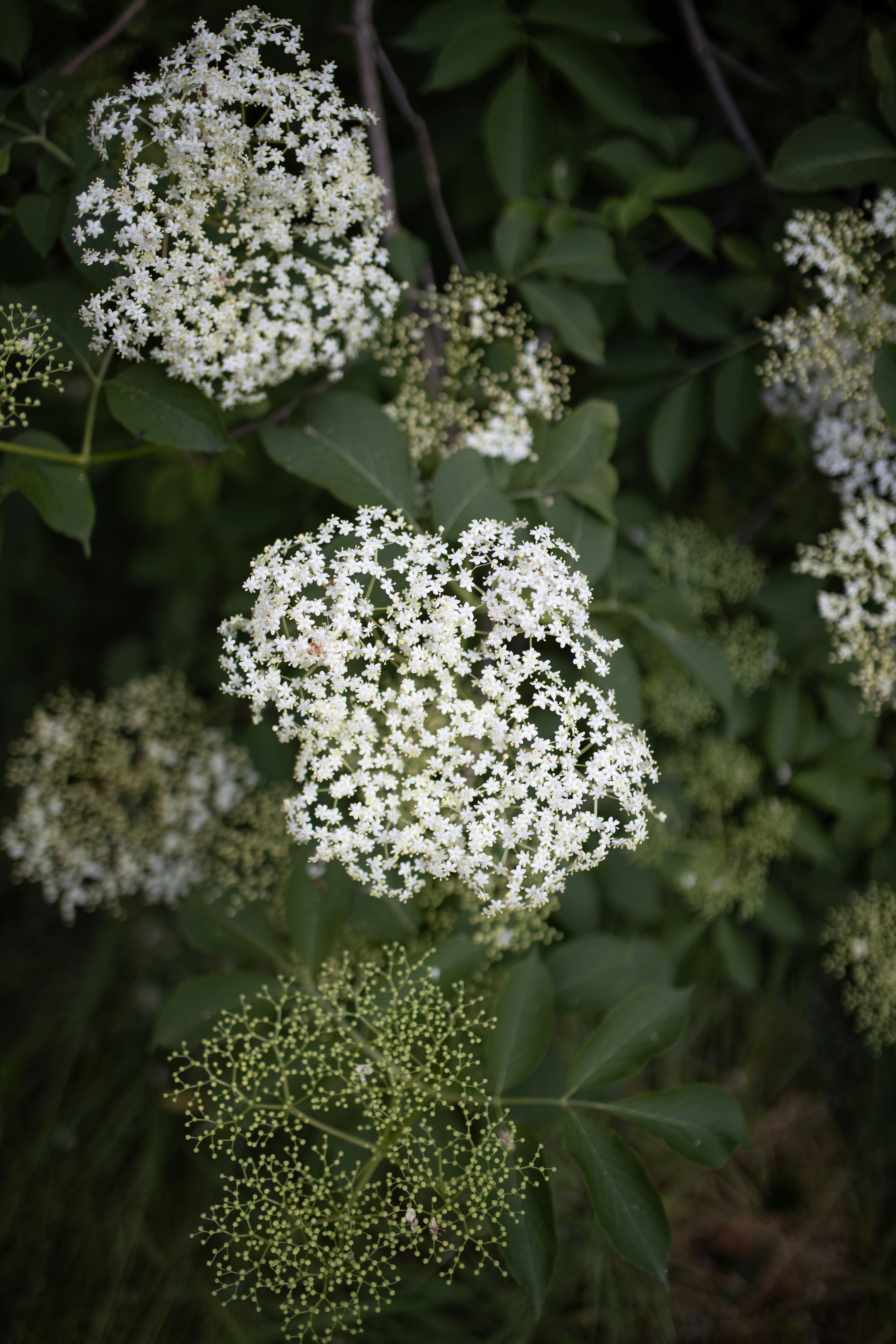
Elderflower's volatile compounds are fragile. The window between peak harvest and degradation is narrow: pick when 75-80% of the umbel is open, before the flowers begin to brown. Process within 4-6 hours for maximum aromatic retention.
Cold infusion in simple syrup is the gentlest extraction method and preserves the most linalool and cis-rose oxide. Submerge fresh flowers in a 1:1 syrup, refrigerate for 24-48 hours, then strain.
For alcohol-based extraction, a brief maceration of 12-24 hours in 40% ethanol. Longer macerations begin to pull green, vegetal notes from the plant material that overpower the delicate floral character.
Elderflower is all top note. It leads with an intense, honeyed floral that reads somewhere between muscat grape and lychee, with a faint green undertone.
Intensely floral, honeyed, with muscat grape and lychee notes. Faintly green and herbaceous. Immediately identifiable even at low concentrations.
Sweet, floral, with a delicate honeyed quality. Very mild. No bitterness in properly prepared extractions. Faint pear-like fruitiness.
Light and clean. No astringency or coating. In syrup preparations, the mouthfeel comes from the carrier, not the botanical.
Short to medium. The floral note fades quickly, leaving a faint honeyed sweetness. This rapid decay is why elderflower works best as an accent.
Elderflower is the garnish of the liquid world. It adds aromatic lift and floral complexity without adding weight or bitterness.
Elderflower cordial, prosecco, soda, mint. The elderflower's linalool plays off the prosecco's ester profile, and the carbonation volatilizes the aromatics.
Elderflower syrup replaces simple syrup in the Collins template. The floral top note lifts gin's juniper and citrus without changing the drink's architecture.
Primary floral compound. Sweet, slightly woody floral aroma. Present in high concentration in fresh flowers. Degrades with oxidation and heat.
Contributes the lychee, muscat grape character. Extremely potent at low concentrations. The distinctive aroma fingerprint.
Sweet, floral, slightly tropical. Contributes to the honeyed quality. Forms from linalool degradation in dried material.
Green, waxy, slightly floral. Works with linalool and rose oxide to build the full floral chord.
Non-aromatic flavonoid glycoside. Faint bitterness in high-concentration extracts. Yellow pigmentation.
Mild astringency in over-extracted preparations. Minimized by short extraction times and stem removal.
Both share linalool as a primary aromatic. Coriander's citrus expression and elderflower's floral expression of the same molecule reinforce each other.
Angelica provides the earthy, musky foundation that elderflower completely lacks. Deep structure below, floral lift above.
Cardamom's cineole and terpinyl acetate add spice and depth to elderflower's pure floral note.
Elderflower's value is entirely in its volatile aromatic profile, and that profile starts degrading the moment you pick it. Process fast, extract gently, and use cold methods whenever possible. If your elderflower preparation doesn't smell like fresh muscat and honey, you've already lost the compounds that matter.