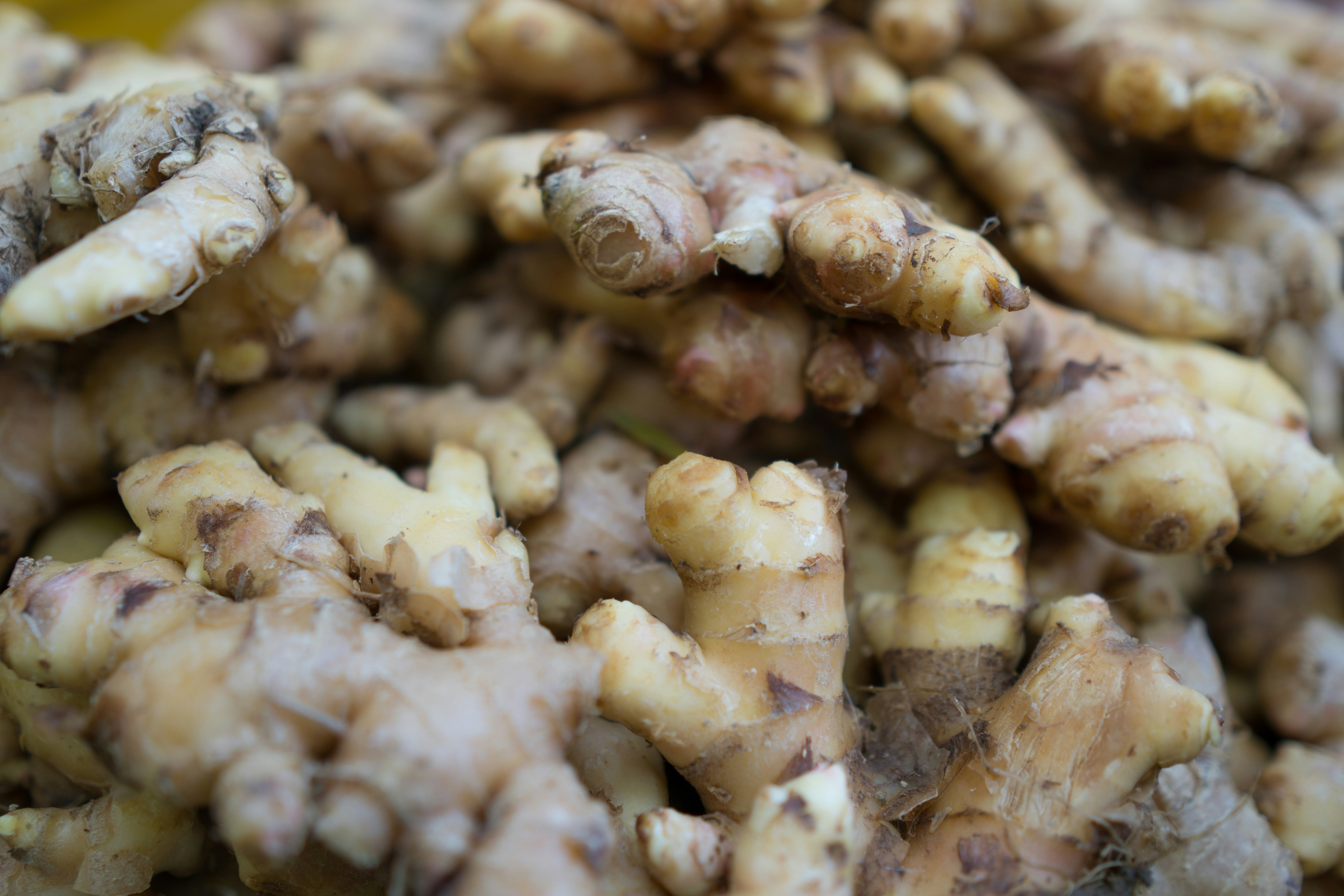
Ginger (Zingiber officinale)
Field Note #007

Ginger

Zingiber officinale
PhenolsTerpenesTrigeminalSoda Foundation
Gingerol is a vanilloid compound, structurally related to capsaicin. It triggers the same TRPV1 heat receptors on your tongue. But where capsaicin is a blunt instrument, gingerol is precise: warm, bright, and self-limiting. It builds and then it lets go.
ExtractSensory NotesIn the GlassCompound MapConnectionsTakeaway

Extract

Fresh ginger and dried ginger are chemically different products. Fresh rhizome is gingerol-dominant: bright, pungent, citrus-forward. Drying converts gingerols to shogaols through dehydration, shifting the profile toward a deeper, more sustained heat with less brightness.

For fresh ginger extraction, juice is the fastest path. A centrifugal juicer yields a cloudy, intensely pungent liquid that can be clarified with a centrifuge spin at 4000 RPM for 5 minutes. The clarified juice holds the gingerol content while dropping the starchy sediment.

For dried ginger tincture, cold maceration in 60% ethanol for 48 hours pulls the shogaol-dominant profile cleanly. The ultrasonic homogenizer cuts this to 30 minutes at 50% amplitude, but monitor temperature closely. Gingerols begin to degrade above 60C.

Sensory Notes

Ginger is one of the most complex single-ingredient profiles in the botanical library. It delivers simultaneous heat, citrus aromatics, and a woody undertone.

Aroma

Bright citrus-forward (fresh) or warm, woody, slightly camphoraceous (dried). Zingiberene and citral drive the aromatic profile.

Taste

Sharp, clean pungency with a warm, slightly sweet foundation. Fresh ginger reads as bright and cutting. Dried ginger reads as deeper and more sustained.

Mouthfeel

Warming. The TRPV1 activation creates a spreading heat across the tongue and into the throat. Fresh ginger has a lighter, more volatile heat.

Finish

Medium-long with a warm decay. The heat dissipates cleanly, leaving a faint citrus-woody echo. No metallic or astringent off-notes.

In the Glass

Ginger is the most versatile botanical in the library. It works across every category: bitters, sodas, shrubs, cocktails, and standalone preparations.

Ginger Beer

The foundation of craft ginger beer is fresh juice, acid phosphate or citric acid, and sugar. 30-40g fresh ginger per liter of syrup hits the sweet spot between approachable and assertive.

Penicillin

Ginger syrup bridges the scotch's smoky phenols and the honey's sweetness. The gingerol-lemon interaction creates brightness that cuts through the whisky's weight.

Compound Map

Phenol (Vanilloid)

[6]-Gingerol

Primary pungent compound in fresh ginger. TRPV1 agonist. Responsible for the sharp, bright heat. Converts to shogaol upon drying.

Phenol (Vanilloid)

[6]-Shogaol

Dominant pungent compound in dried ginger. Roughly twice as pungent as gingerol. Produces a deeper, more sustained heat.

Terpene

Zingiberene

Primary sesquiterpene in ginger essential oil. Warm, woody, slightly sweet aromatic note. Up to 35% of the volatile fraction.

Aldehyde

Citral

Mixture of geranial and neral. Bright, lemony top note in fresh ginger. Volatile, diminishes in dried preparations.

Terpene

beta-Bisabolene

Warm, balsamic undertones. Works with zingiberene to build the base aromatic character.

Phenol

Paradol

Formed from shogaol under sustained heat. Less pungent. Indicates over-processing or excessive heat during extraction.

Connections

Takeaway

Fresh and dried are two different ingredients.

The gingerol-to-shogaol conversion that happens during drying fundamentally changes the compound profile. Fresh ginger is bright, cutting, and volatile. Dried ginger is deep, warm, and persistent. Know which one you need before you start the extraction. They are not interchangeable.

← Previous
Dandelion