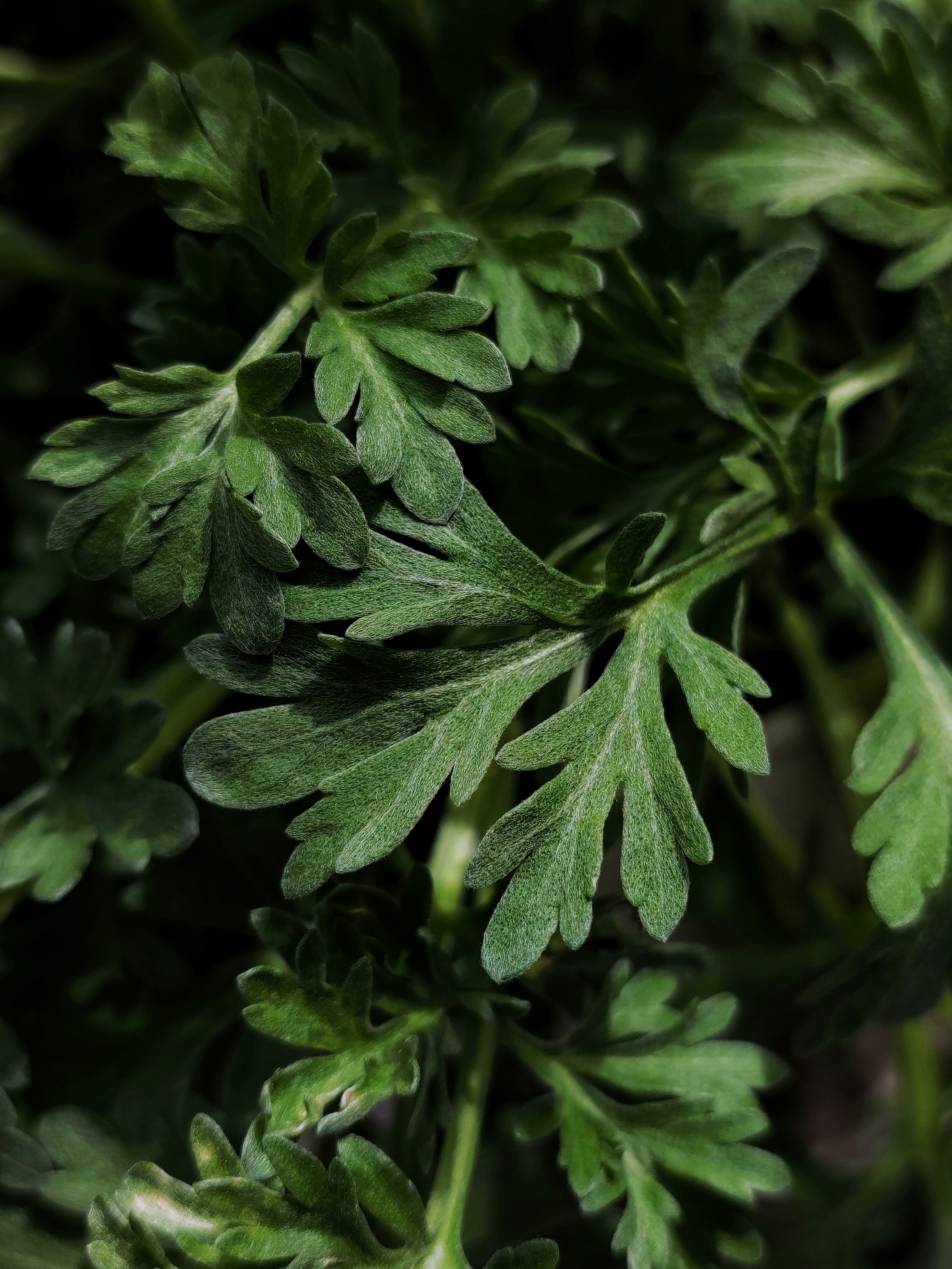
Wormwood demands respect in extraction. Absinthin and artabsin are intensely bitter sesquiterpene lactones that will overpower a formula if you're not precise. Maceration in 60-70% ethanol for 24-48 hours maximum. Longer pulls too much of the waxy, vegetal character that muddies the clean bitter profile.
The volatile fraction is dominated by thujone (alpha and beta), along with chamazulene, bisabolol, and sabinyl acetate. These are the aromatic compounds that give wormwood its herbal, camphoraceous, slightly minty nose. They extract quickly and degrade with heat, so cold maceration or short ultrasonic runs preserve them best.
Two species matter: Artemisia absinthium (grand wormwood) for the heavy bitter lifting, and Artemisia pontica (Roman wormwood) for a gentler, more aromatic profile. Most classic absinthe and vermouth recipes use both. For bitters formulation, absinthium is the one you want.
Wormwood presents a distinctive sensory profile that reflects its unique compound composition.
Herbal, camphoraceous, with a dry sage-like quality and faint mint undertone. Chamazulene gives a subtle blue-green aromatic character at higher concentrations.
Profoundly bitter. Absinthin registers at the extreme end of the bitterness scale. Even highly diluted, the bitter sensation is immediate, persistent, and penetrating.
Drying. Significant astringency from tannins and polyphenols. Coats the palate and lingers. The bitterness has physical weight to it.
Extremely long. The bitter sensation persists for minutes. A slight numbing quality develops at higher concentrations. The herbal aromatics fade first, leaving pure bitterness.
Wormwood finds its role in formulation through its primary compound contributions and how they interact with other ingredients.
Wormwood's defining application. The louche (clouding with water) releases trapped terpenes and softens absinthin's intensity. The sugar cube isn't sweetness; it's a dosing mechanism.
Wormwood is the literal namesake of vermouth (from German 'Wermut'). In combination with gentian and cinchona, it provides the bitter architecture that balances fortified wine's sweetness.
The primary bitter compound. One of the most bitter substances found in nature. Structurally a dimeric guaianolide. Responsible for wormwood's legendary intensity.
Secondary bitter lactone. Less intense than absinthin but contributes to the full bitter profile. Works synergistically with absinthin.
The compound behind absinthe's mystique. GABA receptor modulator. Present at 0.2-1.4% in the essential oil. Strictly regulated in finished products.
Blue-colored sesquiterpene formed during distillation. Anti-inflammatory. Gives high-quality wormwood distillates their characteristic blue-green tint.
Ester contributing to the herbal, slightly woody aroma. Part of the volatile fraction that makes wormwood aromatic, not just bitter.
Gentle, floral terpene alcohol also found in chamomile. Provides a subtle sweet-herbal counterpoint to the dominant bitterness.
The classic bitter pairing. Gentian's secoiridoid bitterness (amarogentin) is sharp and immediate; wormwood's lactone bitterness is broader and more persistent. Together they cover the full bitter spectrum.
Angelica's phthalides and coumarins bridge wormwood's herbal intensity toward a softer, rounder aromatic profile. This pairing is foundational in vermouth and amaro production.
Cinnamaldehyde's warm sweetness offsets wormwood's cold bitterness. The combination appears in dozens of traditional European bitter liqueur recipes.
Wormwood isn't just another botanical. It's the reason absinthe exists, the reason vermouth has its name, and the reason the word 'bitter' carries weight. Absinthin sets the ceiling for what bitterness can be. Learn to dose it correctly and it becomes the most powerful tool in the library. Overdose it and nothing else in the glass matters.