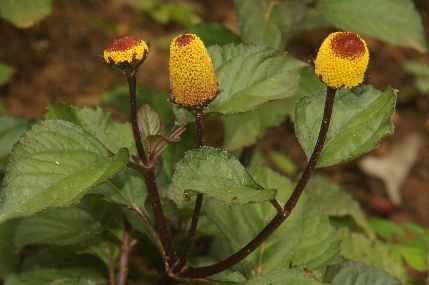
Fresh flower buds (buzz buttons) deliver the strongest spilanthol concentration. Dry them gently at 35-40C to preserve the alkylamide content, or use fresh. Tincture in 60-70% ethanol for 3-5 days. Spilanthol extracts rapidly. The tingle is apparent in the tincture within 24 hours.
Leaves and stems contain spilanthol at lower concentrations than the flower buds but are more available. Leaf tincture works for applications where you want moderate buzz without overwhelming the palate. The flower buds are the precision tool; the leaves are the broad brush.
Spilanthol degrades with extended heat exposure. Keep extraction temperatures below 40C. Ultrasonic extraction works well at short durations (5-10 minutes) for rapid processing. The compound is oil-soluble, so fat-based infusions (clarified butter, oil) also capture it effectively.
Mild, slightly green, herbaceous. Unremarkable aromatically. Paracress is not about aroma; it is entirely about the trigeminal experience on the tongue.
An initial herbaceous, faintly bitter note immediately gives way to an intense buzzing, tingling, numbing sensation. Electric is the most accurate descriptor. Profuse salivation begins within seconds.
The defining characteristic. A localized vibrating buzz, more intense and more electric than Sichuan pepper. The numbing builds over 30-60 seconds and can persist for 10-15 minutes. Salivation is dramatic.
Extremely long. The buzz persists for minutes after the initial dose. A residual numbness and tingling remains. The salivation effect outlasts the buzz. The actual flavor (what little there is) fades quickly.
Paracress tincture (2-3 drops) in a gimlet. The buzz transforms the drinking experience from flavor-first to sensation-first. Lime's citric acid amplifies the tingling. Every sip reactivates the effect.
A single fresh flower bud placed on the rim or dropped in the glass. The drinker bites it and the electric sensation reframes everything that follows. Used increasingly in high-end cocktail bars as an experience modifier.
The primary bioactive compound. An N-isobutylamide that activates TRPV1, TRPA1, and mechanosensory channels simultaneously. Creates the signature electric buzz. Structurally related to sanshool but with distinct receptor pharmacology.
Secondary alkylamide contributing to the overall trigeminal effect. Less potent than spilanthol individually but adds complexity to the sensory experience.
Sesquiterpene present in minor amounts. Woody, spicy note. Also found in black pepper and cloves. Not a major flavor driver here but contributes to the faint herbal background.
Present in leaves and flowers. Mild bitterness and antioxidant activity. Not a significant flavor driver but part of the botanical's overall phenolic profile.
Tertiary alkylamide. Adds to the cumulative receptor activation that makes paracress's buzz more complex than a single-compound effect.
Another member of the alkylamide family in paracress. Collectively, these compounds create a broad receptor activation profile that no single molecule could achieve.
Both are alkylamide-driven trigeminal ingredients. Sichuan pepper's sanshool creates a 50 Hz vibration; paracress's spilanthol creates a higher-frequency electric buzz. Together they layer two distinct tingling sensations.
Gingerol's TRPV1 heat combined with spilanthol's TRPV1+TRPA1 buzz creates a multi-channel trigeminal experience. Heat plus electricity. The combination is intense and surprisingly complementary.
Gentian provides bitter backbone for a formulation where paracress provides the tactile fireworks. The combination is structurally interesting: traditional bitterness meets avant-garde sensation.
Paracress is the most tactile ingredient in the botanical library. It has almost no aroma and minimal flavor. What it has is spilanthol, an alkylamide that creates an electric buzzing sensation unlike anything else available to a formulator. It does not add taste; it adds experience. In cocktail and beverage work, that distinction matters. A few drops of paracress tincture transforms a drink from something you taste into something you feel. Used with restraint, it is a tool. Used without it, it is a novelty.