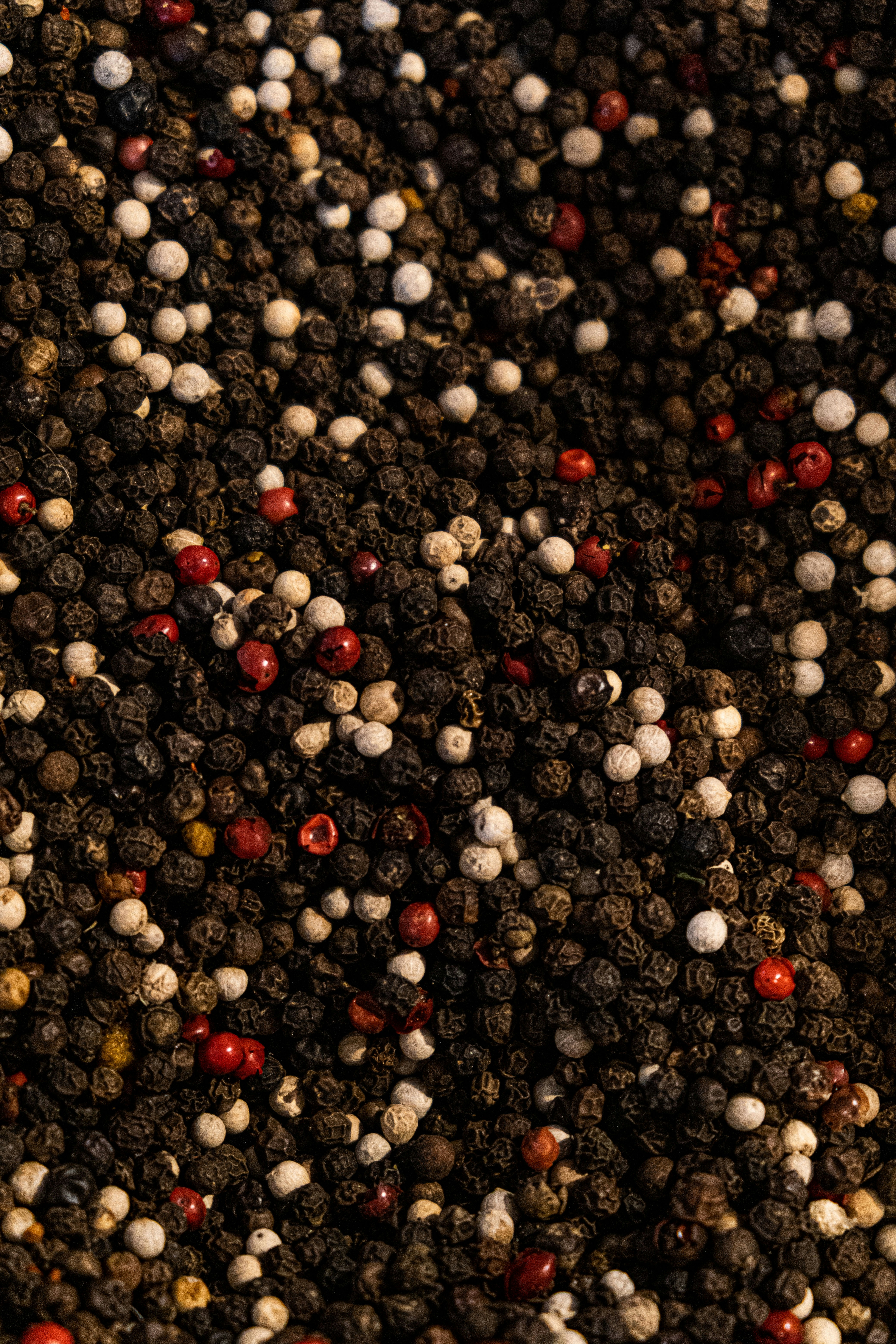
Crack black peppercorns coarsely and tincture in 60-70% ethanol for 5-7 days. The piperine alkaloid extracts steadily throughout; the volatile terpenes pull in the first 48 hours. Whole peppercorns extract too slowly; pre-ground pepper loses its volatile fraction before it hits the menstruum.
Freshly cracked is non-negotiable. Pre-ground pepper has lost most of its volatile terpene content to oxidation. The piperine survives grinding (it is not volatile), but the aromatic complexity, the reason pepper is interesting beyond just heat, evaporates within hours of grinding.
Supercritical CO2 extraction produces the cleanest separation of piperine from the volatile fraction. For lab work, a sequential extraction (short ethanol for volatiles, then extended for piperine) approximates this separation using accessible equipment.
Woody, warm, slightly floral. Beta-caryophyllene dominates with a clove-like, spicy-woody character. Limonene adds citrus brightness. Sabinene contributes a fresh, green-woody note. Complex and layered.
Sharp, biting heat from piperine, building slowly and persisting. Underneath the heat: woody, warm spice from the terpene fraction. White pepper (piperine without the terpene-rich outer layer) demonstrates how much of 'pepper flavor' is actually the volatiles, not the heat.
Piperine creates a localized burning sensation that builds over 10-20 seconds. Less immediate than capsaicin but more persistent. Moderate salivation. The terpene fraction adds a dry, woody quality.
Long. Piperine's heat persists for several minutes. The terpene aromatics fade faster, leaving residual heat without the aromatic complexity. This is why freshly cracked pepper tastes different from pre-ground: the finish tells you what is missing.
Cracked black pepper in vodka or gin for 24-48 hours. The terpene fraction integrates with the spirit's existing volatile profile while piperine adds controlled heat. The base for pepper-spiked martinis and bloody marys.
Black pepper as part of a warm-spice bitters blend with cassia, ginger, and cardamom. Piperine's heat anchors the blend while beta-caryophyllene bridges to the other terpene-rich spices.
The heat compound. An alkaloid (not a capsaicinoid) that activates TRPV1 with slower onset and longer duration than capsaicin. 5-9% of black pepper by weight. Also a bioavailability enhancer for other compounds.
The dominant volatile. Woody, spicy, clove-like. Also found in cloves, rosemary, and hops. A cannabinoid receptor (CB2) agonist. The primary aromatic compound in black pepper.
Citrus brightness in the top note. Provides the subtle citrusy lift that prevents black pepper from reading as purely woody-hot.
Fresh, green-woody monoterpene. Major volatile component. Contributes the 'crisp' quality of freshly cracked pepper that disappears rapidly after grinding.
Sharp, piney top note. Part of the volatile complex that makes freshly cracked pepper aromatic. Evaporates quickly, contributing to the loss of complexity in pre-ground pepper.
Woody, earthy sesquiterpene also found in hops. Present alongside caryophyllene. Adds depth to the woody-spice base note.
Different genus, different mechanism. Piperine (TRPV1 heat) versus sanshool (mechanoreceptor buzz). Combined, they create layered trigeminal complexity: heat plus vibration. The names confuse people; the chemistry could not be more different.
Gingerol and piperine both activate TRPV1 but with different kinetics. Ginger is faster onset, sharper; pepper is slower, more sustained. Together they create a heat profile that evolves over time.
Beta-caryophyllene in pepper and cinnamaldehyde in cassia are adjacent warm-spice compounds. The pairing reads as 'warm spice blend' and appears in chai, mulled wine, and countless bitters recipes.
Black pepper is a heat source and a terpene source packaged together. Piperine delivers slow-building TRPV1 heat. Beta-caryophyllene, sabinene, and limonene deliver the aromatic complexity. They extract at different rates and degrade at different speeds. Freshly cracked pepper has both. Pre-ground has only the heat. For formulation, this means the extraction method determines which black pepper you get: the interesting one or the blunt one.